Product Design Lead — End-to-End Ownership (3+ Years)
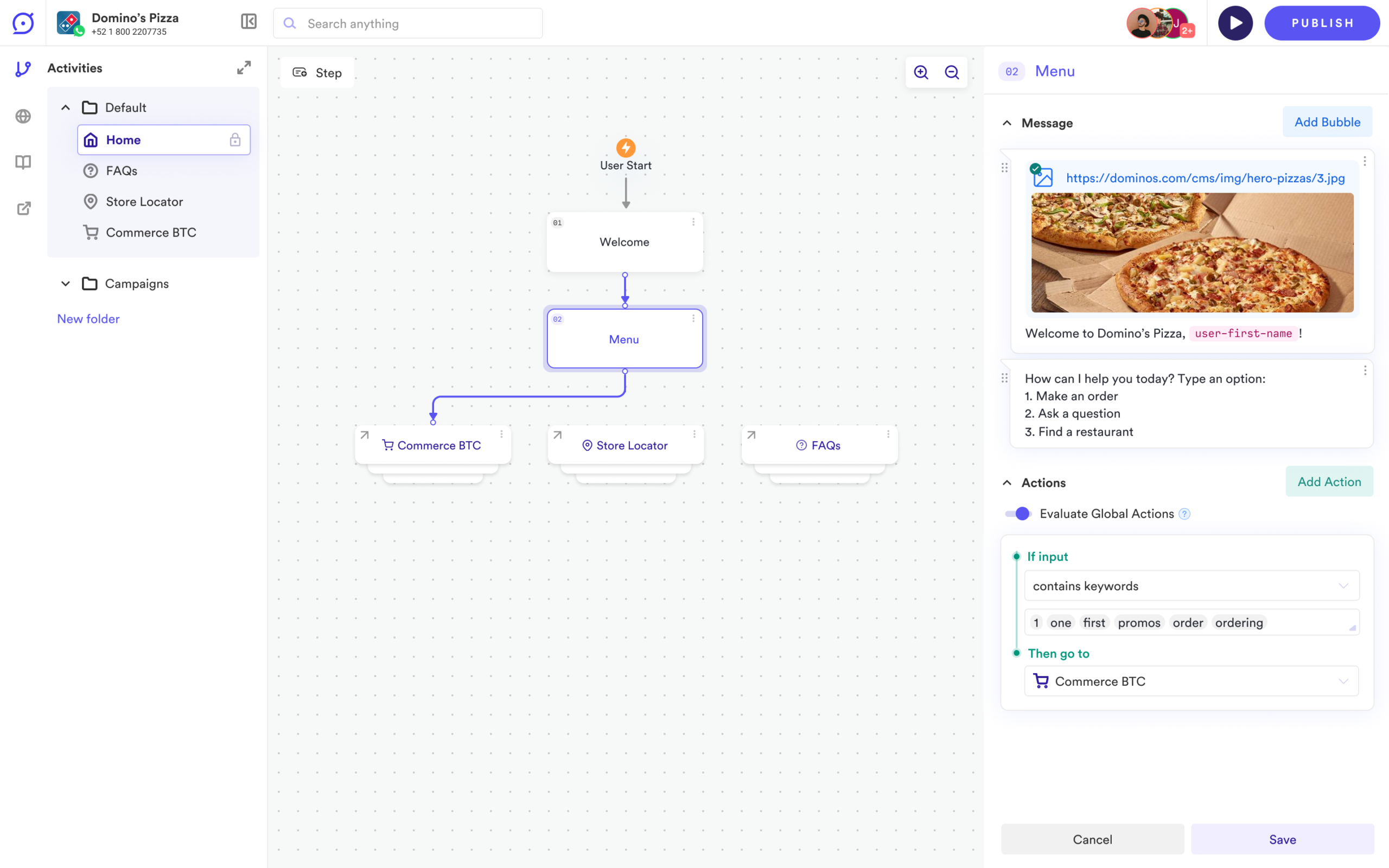
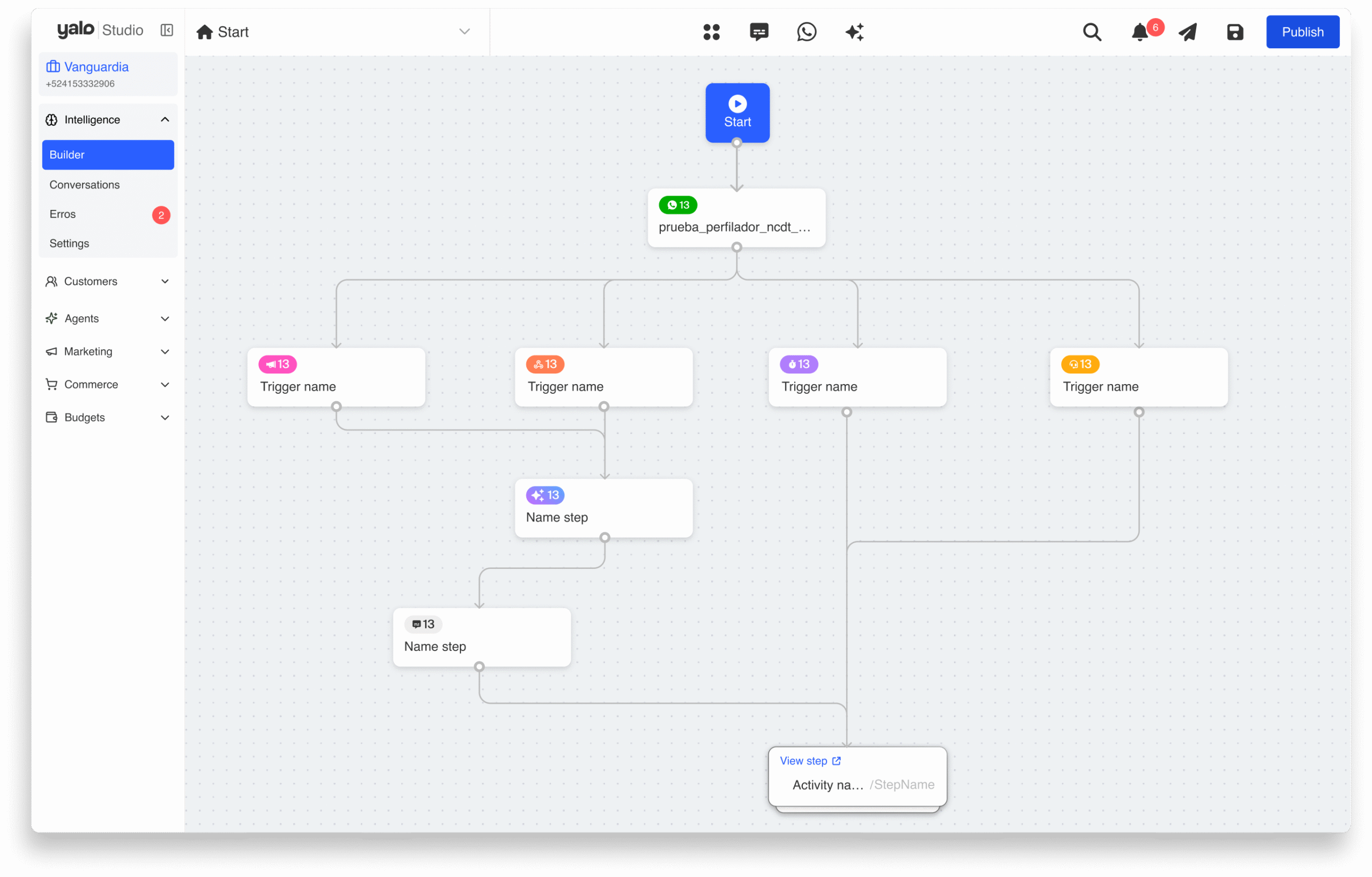
Flow Builder is a core automation platform used to create conversational experiences.
As Product Design Lead, I owned its evolution over 3+ years, improving onboarding success by 60% and reducing publishing time by 40%.
This role required balancing user needs, business goals, and technical constraints while ensuring the product scaled sustainably as usage and complexity grew.
The Problem
Flow Builder was initially designed to deliver functional power quickly. While it technically enabled automation, the experience was:
Difficult to onboard for non-technical users
Cognitively heavy, even for experienced users
Hard to scale as flows became more complex
Core challenge:
How might we empower non-technical users to confidently build complex conversational logic — without sacrificing scalability, flexibility, or performance?
This problem sat at the heart of product adoption, activation, and long-term retention.
This was crucial because:
Flow Builder wasn’t a secondary feature — it was the main interface through which customers delivered value.
If users struggled here:
Onboarding slowed down
Support costs increased
Product value was harder to realize
Improving Flow Builder directly impacted:
Time-to-value
Adoption of advanced features
Customer confidence and retention
Role & Responsibilities
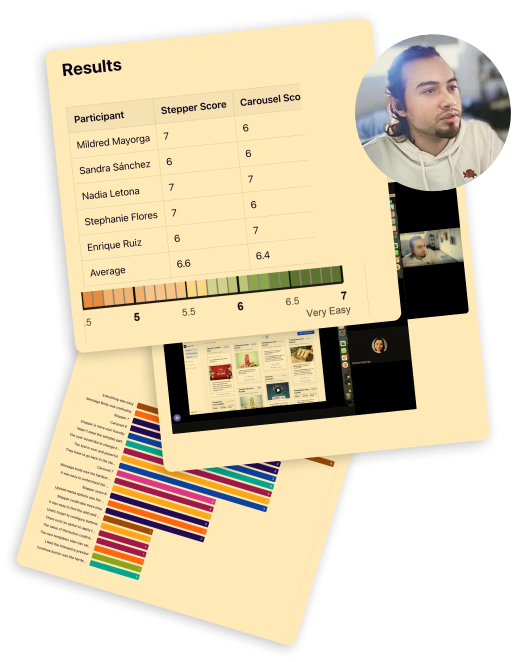
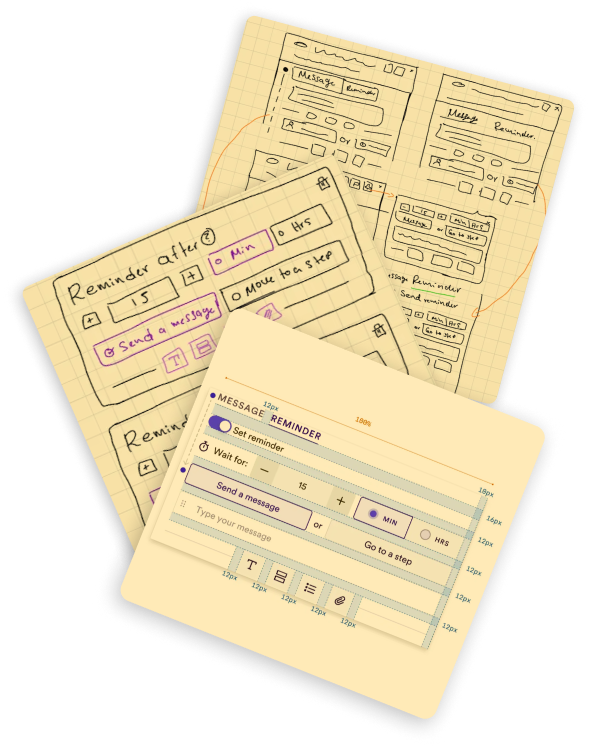
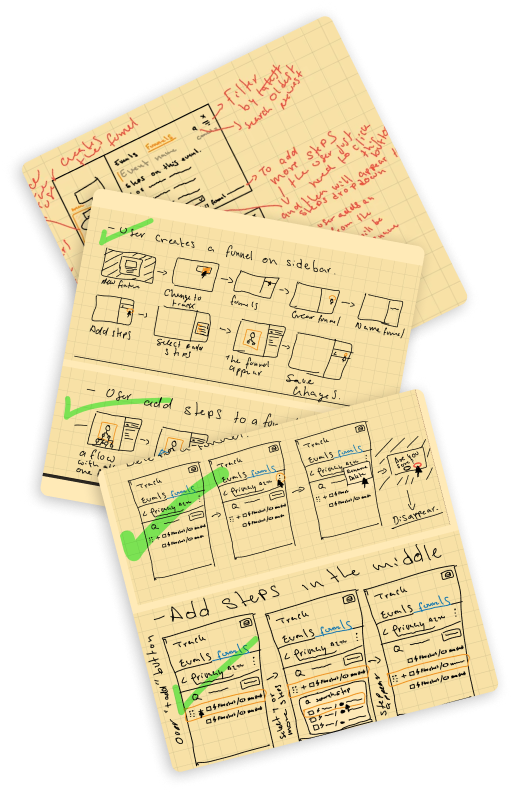
• Product design strategy. • Interaction model and system architecture. • Usability testing and research. • Scalable patterns and system behavior. • Cross-functional. collaboration. • Long-term product evolution.
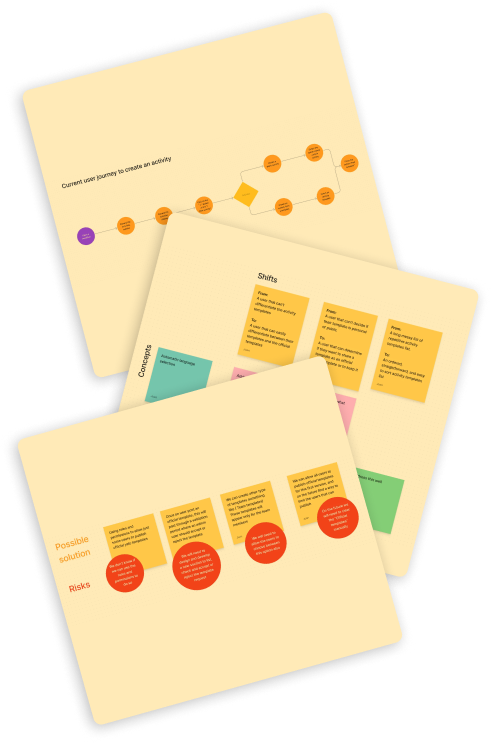
Discovery wasn’t a single phase — it was continuous.
Mapping user flows and system architecture helped reveal where friction accumulated and where simplification would unlock the most value.
These insights reframed Flow Builder not as a “power tool,” but as a guided system that needed to teach users as they worked.
Key Insight: Users didn’t understand system logic, so we shifted from a power-tool model to a guided-experience model.
Sustained Impact Over Time
Across multiple releases, improvements led to:
40% reduction in time-to-publish
60% increase in onboarding success
Increased adoption of advanced flows
Reduced friction for both new and experienced users
These outcomes were the result of long-term ownership, continuous validation, and iterative refinement.
Solution & Evolution
Flow Builder evolved significantly over time:
Leading Flow Builder reinforced the importance of designing for scalability, not just immediate usability. This experience shaped my approach as a product design leader.
Explore how my work helped scale the product, improve adoption, and evolve Yalo’s conversational ecosystem.
Led product design at Yalo, redesigning its flagship Flow Builder, creating the company’s first design system, and shaping AI-driven platform experiences.